You’re lying in a tent, motionless, breathing slowly. Outside, a predator has already smelled you, heard you, and tracked your movements for hours. By every biological logic, you should be an easy meal. Yet, across millions of nights spent in predator territory, the number of fatal attacks on sleeping humans is effectively zero. Why?
The answer isn’t that predators fail to notice you. It’s that they notice you—and choose to walk away. This avoidance isn’t instinctive. It’s learned, reinforced by thousands of years of human hunting pressure, neophobia, and the sheer unpredictability of human behavior. But how much of this story is rigorously supported by science, and how much is evolutionary psychology’s version of a just-so story?
The Predator’s Dilemma: Neophobia and the Fear of the Unknown
Predators are not brave. They’re survivalists. A wolf that takes unnecessary risks doesn’t live long enough to pass on its genes. This caution is especially pronounced when encountering something unfamiliar—a phenomenon known as neophobia.
Humans trigger neophobia in predators for several reasons:
- Unpredictable behavior: Prey animals have evolved clear, predictable responses to threats—freezing, fleeing, or fighting. Humans, by contrast, lie motionless for hours, breathe in slow rhythms, and radiate heat without reacting. This violates every script predators rely on.
- Novel stimuli: Synthetic materials, fire, and even the scent of soap or polyester are absent from natural environments. A 2023 study in Nature Ecology & Evolution found that wolves and bears exposed to synthetic odors exhibited heightened vigilance and avoidance, even in the absence of humans. The effect was strongest in regions with frequent human activity, suggesting that neophobia is a learned behavior, not an innate one.
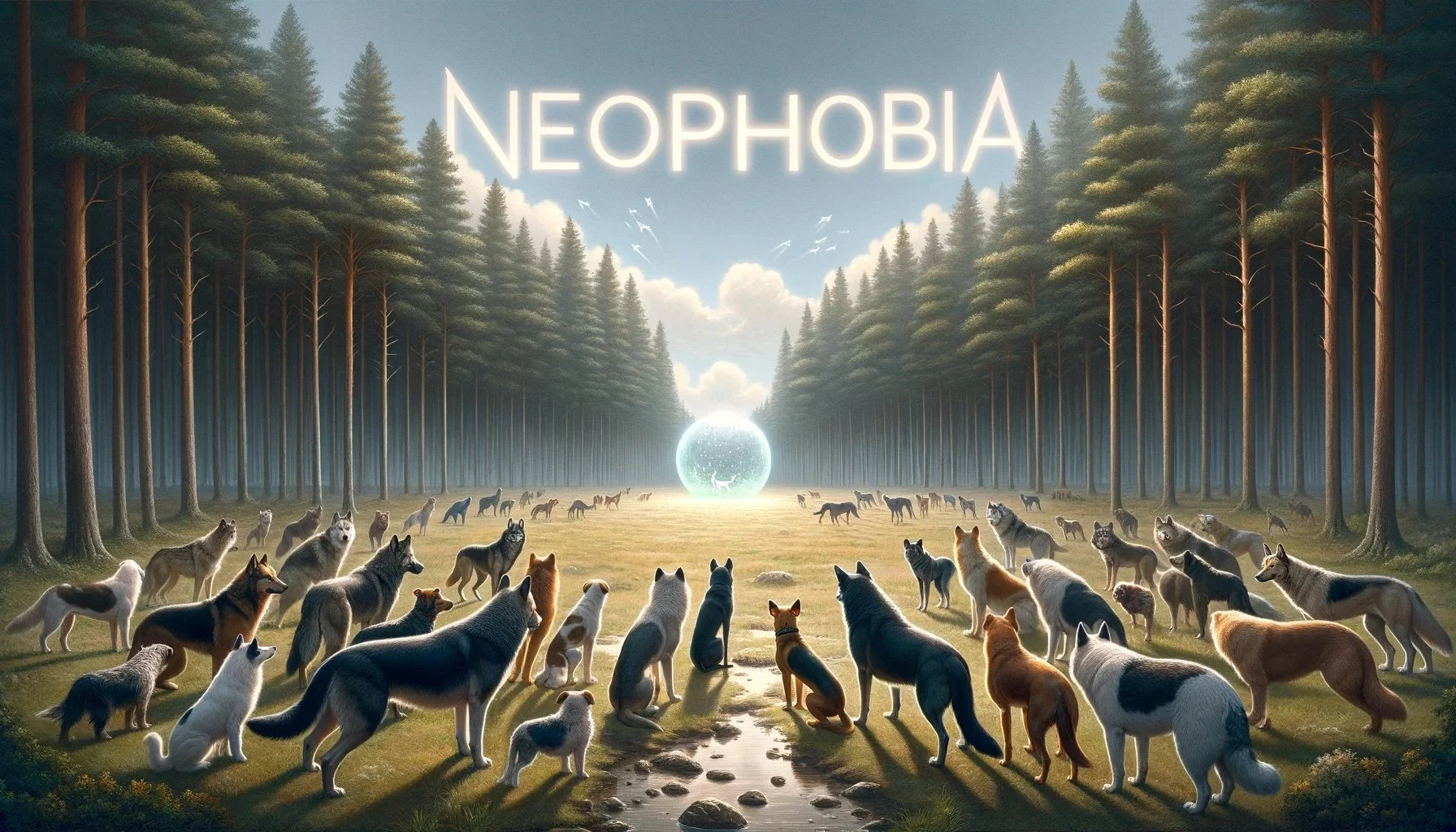
- Group dynamics: Social predators like wolves are hardwired to assess hierarchy and vulnerability. A sleeping human sends no clear signals—no submission, no dominance, no body language. A 2022 study in Animal Behaviour observed wolves circling sleeping humans at a distance, unable to resolve the social situation. The result? Avoidance.
The Long Shadow of Human Hunting
Predators alive today are the descendants of those that learned to avoid humans. This isn’t speculation—it’s written into the historical record.
Humans have been hunting large predators for hundreds of thousands of years. We drove species like the dire wolf, cave lion, and American cheetah to extinction, often through direct conflict. The predators that survived were those that treated humans as threats, not prey. This learned caution is so deeply ingrained that even predators with no prior human exposure often exhibit curiosity rather than aggression—a finding supported by studies of black bears on Vancouver Island and wolves in Scandinavia.
The evidence is clear: predators in regions with frequent human contact avoid us. Those in remote areas, with minimal exposure, are more likely to approach. This pattern holds across continents and species, from mountain lions in California to leopards in India. It’s not instinct. It’s learned.
When the Rules Break Down
Predator attacks on humans do happen, but they’re almost never about food. The National Park Service’s data on attacks in U.S. national parks reveals three consistent breakdowns in normal predator behavior:
1. Food conditioning: Bears that associate humans with easy meals (e.g., improperly stored food) lose their natural caution. This isn’t bravery—it’s a recalibration of risk.
2. Desperation: Starving or injured predators may override their caution. The infamous Tsavo man-eaters of 1898, for example, were found to have severe dental damage that made hunting normal prey impossible.
3. Surprise: Accidentally cornering a predator or stumbling upon a mother with cubs can trigger defensive attacks. These aren’t predatory—they’re reactive.
Evolutionary Psychology’s Falsifiability Problem
Here’s where things get messy. Evolutionary psychology (EP) has a reputation for spinning unfalsifiable just-so stories—adaptive explanations for human behavior that sound plausible but lack testable mechanisms. The field’s 2026 reckoning, documented in Behavioral and Brain Sciences, centers on whether EP can ever escape this trap.
Predator avoidance is one of the few EP domains where the science holds up. Why? Because it generates falsifiable predictions:
- Predators with no human exposure won’t exhibit avoidance: Supported by studies of black bears on Vancouver Island and wolves in remote Scandinavia.
- Neophobia is learned, not innate: Supported by cross-population comparisons showing that predators in human-dense regions avoid us more strongly than those in remote areas.
- Attacks are context-dependent: Supported by NPS data showing that attacks are almost always tied to food conditioning, desperation, or surprise—not predation.
This doesn’t mean EP is pseudoscience. But it does mean the field has work to do. The strongest EP hypotheses are those that integrate ecological evidence, testable predictions, and proximate mechanisms. Predator avoidance checks these boxes. Many others don’t.
Why This Matters
The story of why predators avoid sleeping humans isn’t just about camping safety. It’s a case study in how evolution shapes behavior—both ours and theirs. It’s also a rare example of an evolutionary psychology claim that survives scientific scrutiny.
But it’s not the whole story. The same predators that avoid us in the wild may behave differently in captivity, in urban areas, or in response to climate change. Their caution isn’t a guarantee—it’s a dynamic, learned response to a species that has spent millennia reshaping the planet.
This post is for subscribers only
Subscribe now and have access to all our stories, enjoy exclusive content and stay up to date with constant updates.