You are not seeing the world as it is. You are seeing the world as your brain thinks it should be.
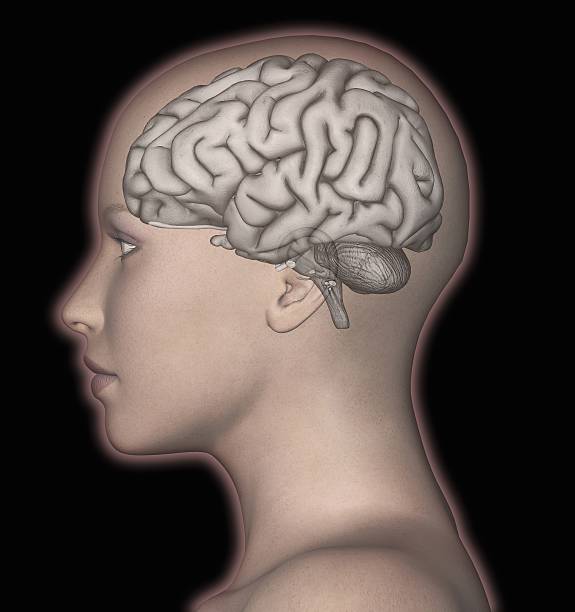
This isn’t a philosophical riddle. It’s a core insight from predictive processing, a neuroscience framework that reframes perception as an act of continuous, unconscious prediction. Your brain doesn’t passively record sensory data like a camera. Instead, it generates a running simulation of the world, compares it to incoming signals, and updates its model in real time. What you experience as "reality" is this simulation—edited, smoothed, and served up as a best guess.
The Brain’s Blind Spot: A Case Study in Prediction
The easiest way to catch your brain predicting reality is to stare at its most glaring flaw: the blind spot. Every human eye has one—a small patch of retina where the optic nerve exits, devoid of light-sensitive cells. If your brain were a camera, this would appear as a dark hole in your vision. But it doesn’t.
Instead, your brain fills in the gap. It samples the surrounding patterns—wallpaper, sky, pavement—and extrapolates what should be there. The result is seamless: no void, no flicker, just a continuous scene. This isn’t a parlor trick. It’s a survival strategy. The brain prioritizes coherence over accuracy because, in a dangerous world, a smooth but slightly inaccurate model is more useful than a perfectly detailed one that arrives too late.
Time Travel for the Senses
Light and sound don’t arrive simultaneously. Light travels faster, so when a firework explodes, you see it before you hear it. Yet your brain binds these signals into a single event. This is temporal binding, and it’s another example of predictive editing.
Neuroscientists have studied this using the flash-lag effect, where a moving object appears ahead of its true position when paired with a flash. The brain doesn’t just synchronize signals—it anticipates them. This explains why you can catch a ball mid-air: your brain predicts its trajectory before the visual data confirms it. The present moment, as you experience it, is already a simulation of the near future.

Memory: The Ultimate Prediction
If perception is a prediction, memory is its shaky archive. The brain doesn’t store experiences like video files. It stores fragments—sensory details, emotions, and narratives—and reconstructs them on demand. Every time you recall an event, your brain reassembles it, often with subtle (or not-so-subtle) edits.
This is why false memories feel so real. In a famous 1995 study by Loftus and Pickrell, participants were persuaded to remember being lost in a mall as children—an event that never happened. A quarter of them later described the fictional scenario in vivid detail, complete with imagined emotions and surroundings. The brain doesn’t distinguish between "real" and "plausible" when reconstructing the past. It just fills in gaps with whatever fits the story.
The Energy Paradox
Predictive processing isn’t just elegant—it’s efficient. The brain consumes about 20% of the body’s energy despite making up only 2% of its weight. Generating predictions and correcting errors requires far less metabolic fuel than processing raw sensory data in real time.
Studies like Bastos et al. (2012) show that the brain’s predictive machinery operates in hierarchical loops. Higher-level regions (like the prefrontal cortex) generate predictions, while lower-level regions (like the sensory cortices) flag mismatches. This minimizes the need for constant, energy-intensive updates. The result? A reality that feels rich and detailed but is actually a sparse, optimized model.
This post is for subscribers only
Subscribe now and have access to all our stories, enjoy exclusive content and stay up to date with constant updates.