For most of the last half-million years, you would not have been alone. Other kinds of humans walked the Earth—species with their own bodies, minds, and ways of being. Today, only one remains: Homo sapiens. But the others are not entirely gone. Their DNA lingers in yours, a quiet inheritance from ancestors who met, mingled, and survived long enough to pass on their genes.
This is not a metaphor. If your ancestry traces outside Africa, roughly 2% of your DNA is Neanderthal. In some populations, like those in Papua New Guinea and Aboriginal Australia, up to 5% is Denisovan. These are not faint echoes. They are active, functional pieces of another kind of human, still shaping how your body works today.
The Myth of the Brutish Neanderthal
Neanderthals have spent centuries saddled with a reputation as dim, hulking cavemen—failed drafts of humanity, outcompeted by their smarter, sleeker cousins. The evidence tells a different story.

Neanderthal brains were as large as ours, sometimes larger. They crafted tools with precision, requiring multiple steps and foresight. They cared for their sick: skeletons show healed injuries so severe—shattered legs, blind eyes—that survival would have been impossible without help. They buried their dead, a practice that suggests ritual, grief, or both. They lived across Europe and western Asia for 400,000 years—longer than Homo sapiens has existed.
Did We Kill Them?
The timing of Neanderthal disappearance is unsettling. Modern humans arrived in Europe around 45,000 years ago. Within 5,000 years, Neanderthals were gone. The pattern repeats across regions: our arrival, their decline. It looks like a slow-motion conquest.
But the evidence for violence is thin. A few Neanderthal skeletons show injuries, but distinguishing between a wound from a spear, a hunting accident, or post-mortem damage is notoriously difficult. Large-scale conflict would have left clearer traces—mass graves, weapons embedded in bones—but these are absent.
Disease is a more plausible culprit. When modern humans migrated out of Africa, they carried pathogens their bodies had adapted to—but Neanderthals had never encountered. Historical parallels are stark: when Europeans reached the Americas, diseases like smallpox and measles devastated Indigenous populations, often before direct contact. A single cough could have been deadlier than a spear.
Then there’s competition. Neanderthals and modern humans hunted the same prey, sheltered in the same caves, and relied on the same resources. In this kind of contest, you don’t need to fight your rival. You just need to be slightly better at surviving the lean years. And here, modern humans may have had an edge: social networks.
The Power of Connection
Archaeological evidence suggests modern humans lived in larger, more connected groups than Neanderthals. Our sites contain shells, pigments, and tools that traveled hundreds of miles—signs of trade and long-distance relationships. Neanderthals, by contrast, seem to have lived in smaller, more isolated bands.
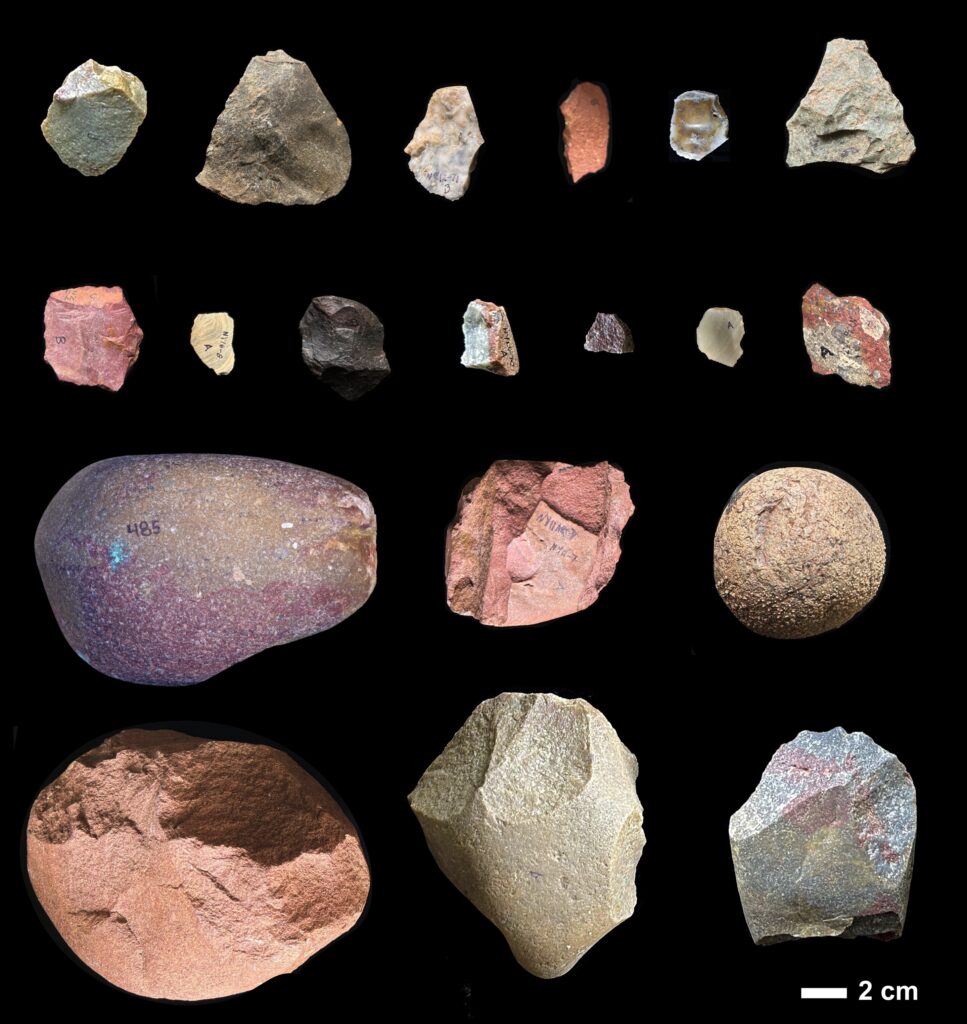
A wider network is a survival superpower. It means knowing where food is across a larger territory. It means having allies to call on when your own valley fails. It means access to diverse ideas, technologies, and mates. Neanderthals, with their smaller groups, may have been more vulnerable to local disasters—droughts, famines, or disease outbreaks—that a connected network could weather.
The Ghosts in Your Genes
The most haunting part of this story isn’t how the other humans disappeared. It’s how they didn’t.
When modern humans met Neanderthals and Denisovans, they didn’t just compete with them. They had children with them. Those children lived, grew up, and had children of their own, carrying fragments of their ancestors’ DNA into the future. Today, those fragments are still there, folded into the genomes of billions of people.
This post is for subscribers only
Subscribe now and have access to all our stories, enjoy exclusive content and stay up to date with constant updates.